

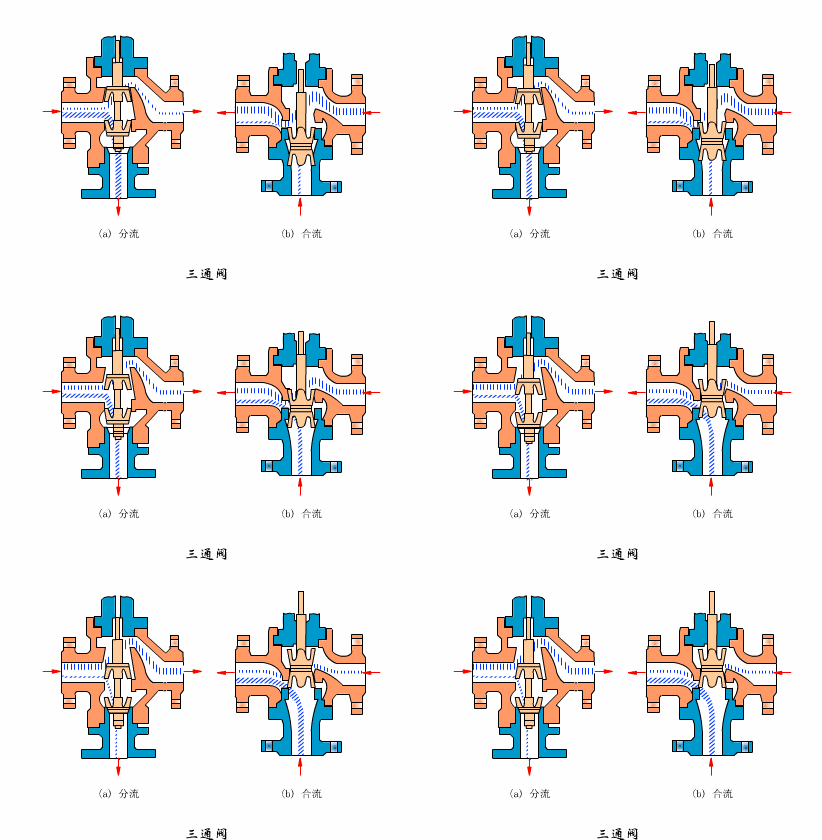
Working principle of regulating valve

Working principle of regulating valve
A control valve, also known as a regulating valve, is a final control element in industrial automation process control. It receives control signals from a regulating control unit and uses power to change process parameters such as flow rate, pressure, temperature, and liquid level. It generally consists of an actuator and a valve body, and can be classified as pneumatic control valves, electric control valves, and self-operated control valves.
Control Valve Structure and Principle
Control valves typically consist of an electric or pneumatic actuator and a valve body. Linear stroke valves mainly include single-seat and double-seat types. The latter features high flow capacity, low unbalanced force, and stable operation, making it particularly suitable for applications with high flow rates, high pressure drops, and large leakage. Angular stroke valves mainly include: V-type electric ball valves, electric butterfly valves, ventilation control valves, and eccentric butterfly valves.
First Generation Products
For nearly a century after the early 20th century, control valves remained at the level of first-generation products. Their characteristics were:
① Primarily single-seat, double-seat, and sleeve valves, representing the level of the 1960s and 70s;
② Incomplete functionality necessitated expanding product variety and modifications to adapt to various applications, resulting in a wide variety of specifications and placing particularly high demands on the use, calculation, selection, calibration, maintenance, and spare parts of control valves;
③ Poor reliability, leading to numerous problems during use;
④ Extremely bulky.
Currently, the popular CV3000 and miniaturized valves offer three 30% improvements over traditional products: a 30% reduction in weight, a 30% reduction in height, and a 30% increase in flow coefficient. However, they don’t represent a qualitative breakthrough; they are merely improvements on traditional products.
Second Generation Products
Second-generation products should offer a qualitative breakthrough in reliability, functionality, and weight. Their control valve characteristics are: ① Full-function ultra-lightweight control valves replace many unreliable, incomplete, and bulky products, replacing the first-generation leading products such as single-seat valves, double-seat valves, and sleeve valves, becoming the dominant product of the second generation;
② Electronic, electric full-function ultra-lightweight control valves gradually replace the traditional “pneumatic valve + electric valve positioner + air source” combination method, which was necessary due to the poor reliability of the original actuator.
From an appearance perspective, second-generation products should feature lightweight, miniaturized, and instrumented characteristics.
The third-generation product’s key features are intelligence and compliance with fieldbus requirements. Its application characteristics include: ① Computer interface; ② Self-diagnostics further improve reliability and reduce failure rate; ③ Improved valve characteristic curves, thereby altering the valve’s regulating quality; ④ Further simplification of the types of control valves and their usage requirements; ⑤ In terms of specifications, it meets the new performance levels required by modern industry, such as the stringent requirements imposed on control valves by new processes and systems introduced by some industrial sectors.