

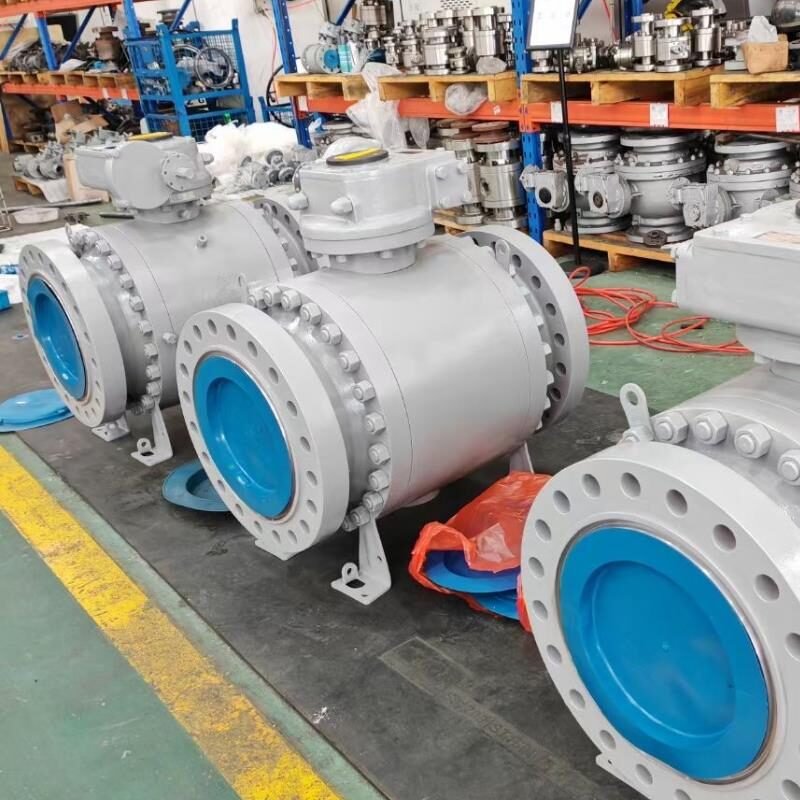
In-depth application of large-diameter fixed ball valves in the petrochemical industry
The petrochemical industry has complex production processes, a wide variety of media, and working conditions covering extreme conditions such as high temperature, high pressure, corrosiveness, flammability, and explosion. As a key control and cut-off device, the reliability of valves is directly related to the safe, continuous and efficient operation of the device. Large-diameter fixed ball valves have become an indispensable core equipment for large-diameter pipelines in petrochemical plants due to their outstanding advantages such as low torque, two-way sealing, fire protection, anti-static, and long life.
This article will start from the actual needs of the petrochemical industry and analyze in detail the application, selection key points and successful practices of large-diameter fixed ball valves in typical process units.
1. Core requirements for large-diameter valves in the petrochemical industry
In petrochemical plants such as oil refining, ethylene, aromatics, and PTA, large-diameter pipelines (DN200 to DN1200) usually undertake key tasks such as raw material feeding, tower bottom discharging, circulating medium transportation, and storage tank entry and exit. These working conditions impose the following stringent requirements on valves:
Zero leakage shut-off: prevent the leakage of flammable and toxic media and meet environmental protection and occupational safety requirements.
Reliable operation and low torque: it can be quickly cut off in emergency situations, and the actuator is not too bulky.
Corrosion resistance and erosion resistance: cope with media containing sulfur, acid, and solid particles.
Fireproof and anti-static: complies with API 607/6FA and NACE standards to eliminate fire and explosion hazards.
Long maintenance cycle: Petrochemical plants usually run continuously for 3 to 5 years before shutting down for maintenance. Valves need to be maintenance-free or low-maintenance capable.
Large diameter fixed ball valve is an ideal choice to meet the above requirements.
2. Technical advantages of large-diameter fixed ball valves in petrochemical industry
Compared with traditional floating ball valves or other types of valves, fixed ball valves perform particularly well under large-diameter petrochemical conditions:
Comparison items Floating ball valve Large diameter fixed ball valve
The operating torque increases sharply with the caliber and pressure difference, requiring a large thrust actuator. The torque is small (about 1/3 to 1/2 of the float), and manual or small-sized actuators are sufficient.
Sealing reliability: Upstream sealing relies on ball thrust, and the valve seat is easily deformed under high pressure. Fixed ball + floating valve seat, two-way independent sealing, low risk of internal leakage
Temperature resistance range: Mostly soft seals, PTFE suitable for -20~200℃, optional hard seal (metal spraying), suitable for -196~450℃
Media adaptability: Clean media is better, particles may easily damage the seal. Hard sealing type can withstand particles and slurry media.
Maintenance convenience. Disassembly and repair are complicated. The valve seat (part of the structure) can be replaced online, and the maintenance time is short.
Therefore, fixed ball valves have become standard configurations in key locations such as large tower inlet and outlet pipelines, heating furnace feeds, pump inlets and outlets, and tank farm root valves in petrochemical plants.
3. Detailed explanation of typical application scenarios
3.1 Normal and vacuum distillation device
The atmospheric and vacuum unit is the “faucet” of oil refining, processing crude oil and separating naphtha, diesel, wax oil and residual oil. Large diameter fixed ball valves are mainly used in:
Crude oil inlet device shut-off valve: DN600~DN1000, Class 150~300, the medium contains salt and sand, and requires corrosion resistance and wear resistance. Use 316L valve body + carbide spray ball, soft and hard double seal (main seal PTFE + metal backup seal).
Residual oil line at the bottom of the vacuum tower: temperature ~380°C, medium viscosity is high, and contains coke particles. It adopts a full-bore fixed ball valve with a hard sealing structure (tungsten carbide spraying) to prevent coking and sticking.
3.2 Catalytic cracking unit
Catalytic cracking is the core process for lightening heavy oil, and there are catalyst dust and high-temperature flue gas. Applications for fixed ball valves include:
Regenerator flue gas pipe: DN800~DN1200, temperature 650~700℃, containing catalyst dust. Use high-temperature resistant alloy valve body (such as Inconel or 310S), metal hard seal, and wear-resistant alloy surfacing for the valve seat and ball.
Main air unit inlet and outlet: required to be cut off quickly and withstand thermal shock. It adopts pneumatic fixed ball valve, fireproof design, response time ≤3 seconds.
3.3 Hydrogenation device
The hydrogenation reaction is carried out in a high-pressure hydrogen environment, and the medium contains H₂S, which is prone to hydrogen embrittlement and sulfide stress corrosion. Typical applications:
High-pressure heat exchanger bypass valve: Class 1500~2500, DN250~DN500. Using hydrogen-resistant steel valve body (such as 12Cr2Mo1V), NACE MR0175 certification, the valve internal parts are surface hardened to prevent hydrogen-induced damage.
Inlet and outlet of circulating hydrogen compressor: extremely low internal leakage rate (ANSI Class VI) is required to prevent hydrogen leakage. It adopts double valve seat, double sealing surface structure, and valve stem bellows seal (optional).
3.4 Storage, transportation and tank area
The raw material tank area, intermediate tank area and finished product tank area are the hubs for material storage and dispatching in petrochemical plants. Large-diameter fixed ball valves are widely used in can root valves, pump inlets and outlets, and loading/shipping pipelines.
Can root emergency shut-off valve: API 607 fire protection certification, fail-safe (FC/FO) actuator, meeting SIL2/SIL3 safety level requirements. The valve must have a valve cavity pressure relief function to prevent overpressure damage due to thermal expansion.
Large-diameter pipelines at shipping docks: DN600~DN1200, Class 150. The sealing is required to be zero leakage, and the switching frequency is low but must be reliable. Use turbine worm manual + electric actuator and double sealing ring structure.
3.5 Ethylene and polyolefin equipment
The cracked gas, quenched water and polymer slurry pipelines of the ethylene plant have special requirements for valves.
Cutting off between cracked gas compressor sections: The medium contains heavy hydrocarbons and tar, which is prone to scaling. Use fixed ball valve + steam jacket to prevent medium condensation and accumulation.
Discharge from polyethylene/polypropylene reactor: the medium contains powder, which can easily cause sealing surface wear. Use metal hard-sealed ball valves with mirror-polished balls to reduce material adhesion.
4. Key selection points for large-diameter fixed ball valves for petrochemical applications
Combined with the characteristics of the petrochemical industry, the following parameters should be considered during model selection:
4.1 Material selection
Component Material Options Applicable Conditions
Valve body WCB, LCB, CF8, CF8M, CF3M, duplex stainless steel, alloy steel selected according to medium corrosiveness and temperature
Sphere Austenitic stainless steel + surface hardening (WC, CrC, Ni60) Wear-resistant, erosion-resistant, H₂S-resistant
Valve seat PTFE, RPTFE, PEEK, Nylon (soft); metal spraying (hard) Soft seal is used for clean media, hard seal is used for high temperature and particles
Valve stem 17-4PH, Inconel 718 high strength, corrosion resistance, blowout prevention
4.2 Sealing level
General media: ANSI Class IV (internal leakage) or ISO 5208 Rate B
Hydrogen, light hydrocarbons, H₂S media: ANSI Class VI or ISO 5208 Rate A
Flare line/drain line: zero leakage (bubble grade)
4.3 Fire protection and anti-static
All valves should pass API 607 (soft seal ball valve fire test) or API 6FA.
An anti-static path (resistance <10Ω) must be set up between the ball, valve stem and valve body.
4.4 Sulfur resistance requirements (NACE)
For wet hydrogen sulfide environments (sour conditions), valves need to be selected in accordance with NACE MR0175/ISO 15156:
Material hardness ≤22 HRC (some ≤35 HRC)
Certain high-hardness alloys or coatings are prohibited
All pressure-bearing parts and fasteners must comply with sulfur resistance specifications
4.5 Actuator and accessories
Manual turbine: suitable for large diameter valves with less operation
Pneumatic/electric: It is necessary to calculate the torque under the maximum pressure difference, and the safety factor is 1.3~1.5
Emergency cut-off: Equipped with solenoid valve, limit switch, air lock valve and air storage tank (or spring return)
SIL level: determined based on process safety analysis. Usually can root valves require SIL2 or above.
5. Typical application cases
Case 1: A certain 10-million-ton refining and chemical integration project
Location: Crude oil feed line of atmospheric and vacuum unit
Specifications: DN900/Class 300
Valve configuration: large diameter fixed ball valve, valve body material WCB, ball made of 316L+Ni60 spray welding, PTFE valve seat+metal backup seal
Effect: There has been no internal leakage or operational jamming after two years of operation. Compared with the original floating ball valve, the power of the electric actuator is reduced by 40%, and the energy consumption is significantly reduced.
Case 2: A PTA device in South China
Location: Oxidation reactor discharge line
Medium: high temperature bromine-containing acetic acid slurry (strongly corrosive, containing solid particles)
Specifications: DN600/Class 150, titanium alloy valve body
Valve configuration: fixed ball valve, the ball and valve seat are sprayed with tungsten carbide for wear resistance; two-way sealing to prevent backflow
Effect: The service life reaches more than 48 months, far longer than the plastic-lined butterfly valve used before (which was damaged after 6 months).
Case 3: Renovation of tank root valve in an LPG storage tank area
Original valve: floating ball valve, large torque, difficult to operate manually, and internal leakage
Replaced with: Fixed ball valve, DN400/Class 600, NACE MR0175 certified, Fireproof API 607
Configuration: pneumatic actuator + gas tank, fault close (FC)
Effect: The operating torque is reduced by 50%, the internal leakage detection is zero, and it passes the SIL2 certification audit.
6. Installation and maintenance suggestions
6.1 Installation points
Thoroughly purge the pipeline before installation to prevent welding slag and rust from entering the valve cavity.
Flange bolts should be tightened evenly and diagonally to avoid valve body deformation.
For jacketed valves, the direction of the heat source medium must be confirmed first to prevent temperature difference stress.
6.2 Maintenance strategy
Regular switch test: move the full stroke once a week or every month to prevent the sealing surface from sticking.
Grease injection maintenance: For valves with grease injection valves, special sealing grease should be added every six months, and injected during operation to ensure even distribution.
Leak detection: Use ultrasonic leak detector or bubble method to detect valve stem packing and valve seat leakage.
Overhaul: Disassemble and inspect the valve seat and ball surface during shutdown for maintenance, and grind or replace the valve seat if necessary.
6.3 Frequently asked questions and solutions
Problem Cause Solution
The torque suddenly increases. The bearing is worn or the medium is fouled. Disassemble the bearing, clean it, and replace the grease. If fouling occurs, consider adding purge or jacketing.
Internal leakage, sealing surface damage or valve seat spring failure. Grind or replace the valve seat assembly online.
External leakage (valve stem) The packing is worn or the gland is loose. Adjust the gland or replace the packing (some valves can be replaced online)
The actuator moves slowly. The air source pressure is insufficient or the internal friction is large. Check the air path and manually turn the valve to confirm whether the valve is stuck.
7. Conclusion
The petrochemical industry places extremely high requirements on the safety, reliability and economy of valves. Large-diameter fixed ball valves, with their excellent low torque, two-way zero leakage, fire prevention, anti-static and long life characteristics, perfectly match the harsh working conditions of core equipment such as atmospheric and vacuum pressure, catalytic cracking, hydrogenation, storage and transportation. Correct selection, standardized installation and scientific maintenance can ensure the stable operation of fixed ball valves in petrochemical plants for more than 20 years, providing a solid guarantee for the safety, environmental protection and continuous production of the plant.
If you are looking for large diameter fixed ball valve solutions suitable for petrochemical projects, please feel free to contact our technical team.
We will provide:
Material and seal selection recommendations based on process conditions
Products with complete certifications such as API 607/6FA, NACE, SIL, etc.
3D models, calculation books and on-site technical support
Reference to many successful cases of petrochemical projects at home and abroad