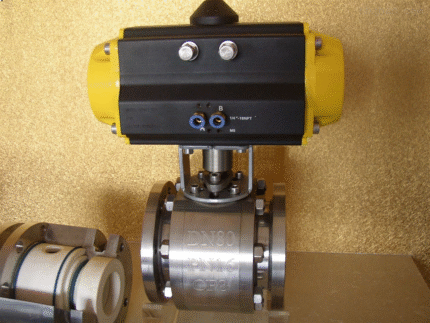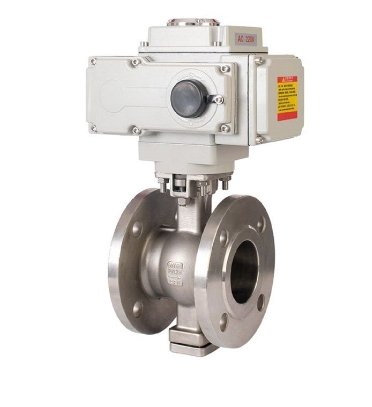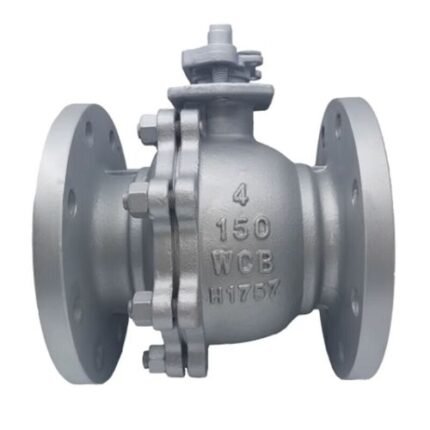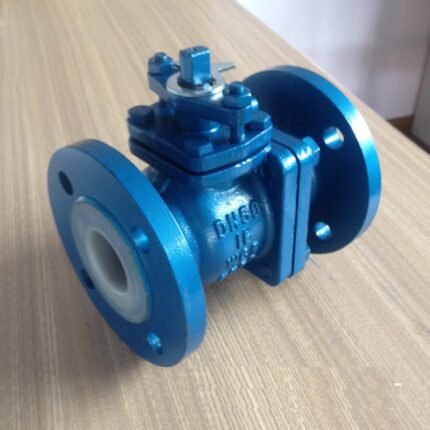
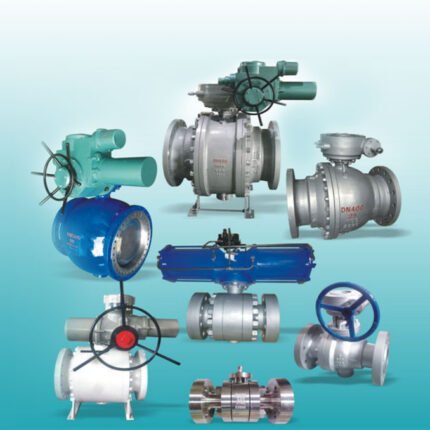
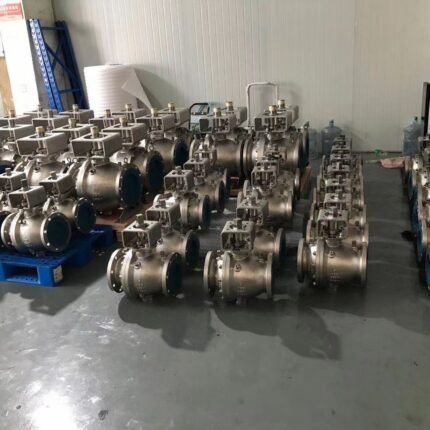
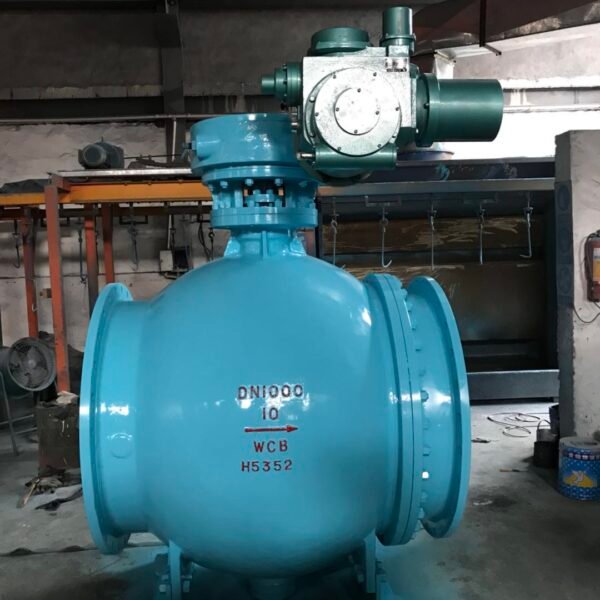
PQ640F Valvola a sfera eccentrica pneumatica API6D & API607
Modello di valvola: PQ640F, PQ640H
Diametro nominale: DN25~DN300
Struttura: Eccentric Rotating Ball Core
Materiale del corpo valvola: Carbon Steel WCB, Acciaio inossidabile 304, Acciaio inossidabile 316
Pressione nominale: PN10, PN16, PN25, PN40
Temperatura applicabile: -20℃~450℃
Applications: Vapore, water, olio, gas, corrosive media
Features: High performance, lunga durata, low opening and closing torque, V-shaped notch with cutting function
Introduction to PQ640F Pneumatic Eccentric Ball Valve API6D & API607:
The PQ640H pneumatic eccentric ball valve features frictionless opening and closing, wear-resistant seals, and low opening and closing torque. It controls the pipeline medium by rotating a hemisphere around an eccentric axis. During opening and closing, no friction occurs between the ball and the valve seat sealing surface, reducing wear on the seals and significantly extending service life. Because the structural principle of the pneumatic eccentric ball valve is very similar to the operation of a triple eccentric butterfly valve, some people refer to the eccentric ball valve as a butterfly valve with a spherical valve disc.
Features of PQ640F Pneumatic Eccentric Ball Valve API6D & API607:
1. The ball and seat of the PQ640H pneumatic eccentric ball valve are completely separated, eliminando l'usura dell'anello di tenuta e superando il problema dell'usura costante tra la superficie di tenuta e la sfera nelle valvole a sfera tradizionali. Il materiale elastico non metallico è incorporato nel sedile metallico, fornendo un'eccellente protezione per la superficie metallica della sede della valvola.
2. The V-shaped notch of the pneumatic eccentric ball valve has a cutting function, which can cut off impurities (twigs, textile bags, ecc.) in the medium when closed, ensuring normal valve opening and closing.
3. The valve hemisphere is made of bimetal, with different alloys welded onto the base material. The valve seat is also welded accordingly and specially treated. The sealing surfaces are combined to form various types such as corrosion-resistant, wear-resistant, and high-strength, meeting the needs of different applications.
4. The pneumatic eccentric rotary valve is particularly suitable for slurry and media containing fibers, as well as media containing small suspended solids. It is widely used in pipelines in petroleum, chimico, fabbricazione della carta, and sewage treatment industries for on/off switching or flow regulation.
Pneumatic Eccentric Ball Valve Technical Parameters
Diametro nominale: DN25~DN300 (MM)
Pressione nominale: PN1.0, 1.6, 2.5, 6.4MPa
Tipo di connessione: Tipo wafer, Collegamento a flangia
Tipo di struttura: Straight-through eccentric ball valve
Tipo di attuazione: Compressed air 4-7bar (manual device optional)
Materiale del corpo valvola: WCB in acciaio al carbonio, Acciaio inossidabile 304, Acciaio inossidabile 316, 316l
Tasso di perdita Q: Soft seal VI class, Hard seal IV class
Adjustable Range: Full cavity type (100:1), 60% cavity type (60:1), 40% cavity type (40:1)
Caratteristiche del flusso: Percentuale approssimativamente uguale
Control Method: Tipo acceso/spento (two-position switch), regulating type (positioner 4-20mA analog signal)
Tipo di attuazione: Single-acting (ritorno primaverile) normally open, normally closed; Double-acting (no return) air-on/air-off
Pneumatic Eccentric Ball Valve Principle Explanation
The pneumatic eccentric ball valve features an offset dimension between the centerline of the hemisphere and the centerline of the valve stem, and between the hemisphere and the centerline of the valve seat. Quando è completamente aperto, the ball is completely disengaged from the valve seat with a certain gap. The rotation radius has two parts: a long radius and a short radius. The tangent to the long radius rotation trajectory forms an angle θ with the valve seat sealing surface. During valve opening and closing, the hemisphere gradually disengages from and gradually compresses against the valve seat surface, thus reducing mechanical wear and scratches between the valve seat and the hemisphere during opening and closing, and improving service life.