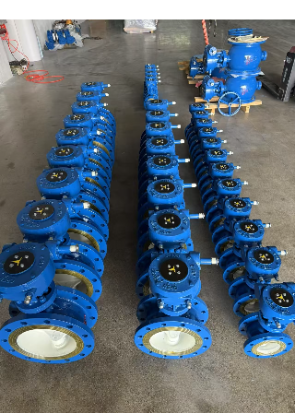

Daily maintenance and upkeep of electric ball valves
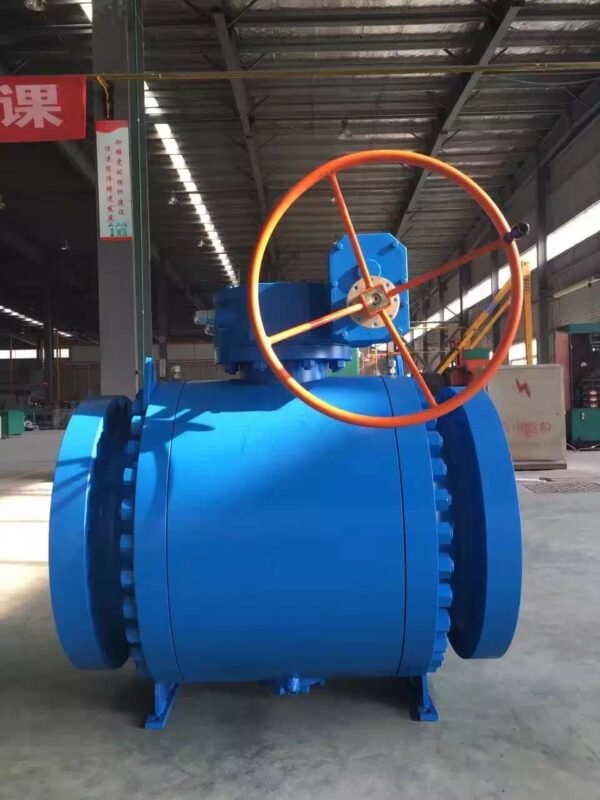
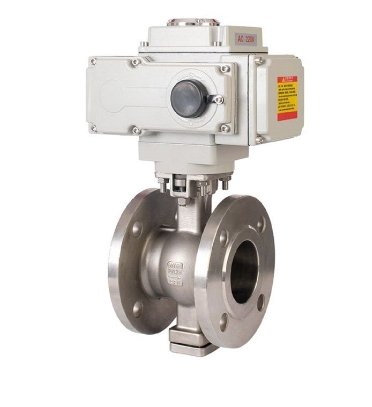
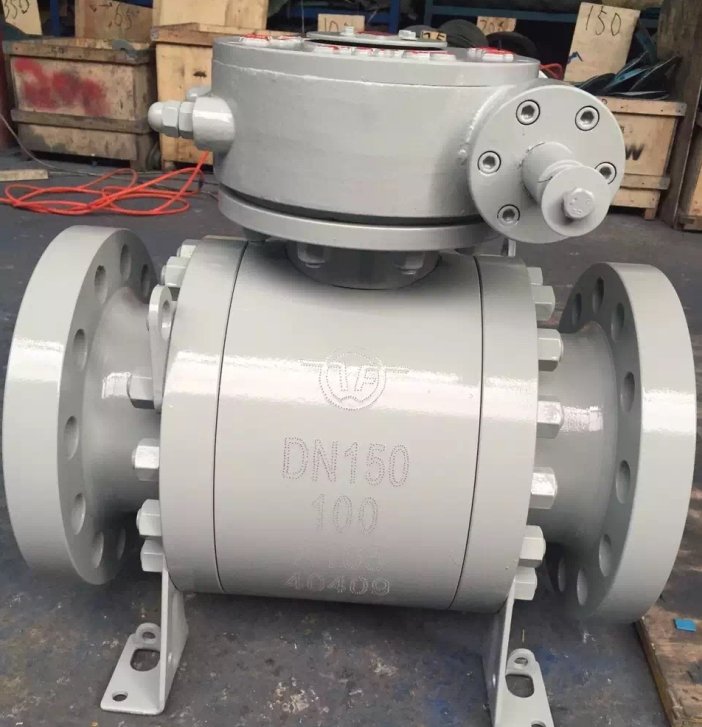
Electric ball valves are suitable for use as on/off and shut-off valves, but recent developments have led to designs that allow for throttling and flow control, such as V-type ball valves. They are suitable for general working media such as water, solvents, acids, and natural gas, and also for media operating under harsh conditions, such as oxygen, hydrogen peroxide, methane, and ethylene, finding wide application across various industries. The ball valve body can be integral or modular.
An electric ball valve is a valve that rotates 90 degrees. The plug is a sphere with a circular through-hole or channel along its axis. The main characteristics of an electric ball valve are its compact structure, reliable sealing, simple design, easy maintenance, and the fact that the sealing surface and the sphere are constantly in a closed state, making it less susceptible to erosion by the medium. Ball valves are primarily used in pipelines for shut-off, distribution, and changing the flow direction of media. They require only a 90-degree rotation and a very small torque to achieve a tight seal.
Electric Ball Valve Daily Maintenance
1. A long service life and maintenance-free period depend on several factors: normal operating conditions, maintaining a harmonious temperature/pressure ratio, and reasonable corrosion data.
2. Even when the ball valve is closed, pressurized fluid still exists inside the valve body.
3. Before maintenance: Release pipeline pressure and place the valve in the open position; disconnect the power or gas supply; detach the actuator from the support.
4. Disassembly and reassembly operations must only be performed after confirming that the upstream and downstream pipelines of the ball valve have been depressurized.
5. Care must be taken during disassembly and reassembly to prevent damage to the sealing surfaces of parts, especially non-metallic parts. Special tools should be used when removing O-rings.
6. During assembly, the bolts on the flange must be tightened symmetrically, gradually, and evenly.
7. The cleaning agent should be compatible with the rubber, plastic, and metal parts of the ball valve, as well as the working medium (e.g., natural gas). When the working medium is natural gas, gasoline (GB484-89) can be used to clean metal parts. 8. Non-metallic parts should be cleaned with pure water or alcohol.
9. Non-metallic parts should be removed from the cleaning agent immediately after cleaning and should not be soaked for a long time.
10. After cleaning, wait for the cleaning agent on the cleaned surface to evaporate (you can wipe it with a cloth that has not been soaked in cleaning agent) before assembling. Do not leave it for a long time, otherwise it will rust or become contaminated with dust.
11. New parts must also be cleaned before assembly.
12. During assembly, metal shavings, fibers, grease (except for those specified), dust, and other impurities and foreign objects should not be allowed to contaminate, adhere to, or remain on the surface of the parts or enter the internal cavity. If a slight leak occurs at the packing, the valve stem nut must be tightened again.
Electric Ball Valve Installation and Maintenance
1. The ball valve can only be disassembled after the pressure before and after it has been released.
2. When reassembling the ball valve body, the bolts must be tightened symmetrically, gradually, and evenly.
3. The cleaning agent should be compatible with the rubber, plastic, and metal parts of the ball valve, as well as the working medium (e.g., natural gas). When the working medium is natural gas, gasoline (GB484-89) can be used to clean metal parts. Non-metallic parts should be cleaned with pure water or alcohol.
4. Individual disassembled parts can be cleaned by immersion. During cleaning, all grease, dirt, adhesive residue, dust, etc., adhering to the surface must be removed.