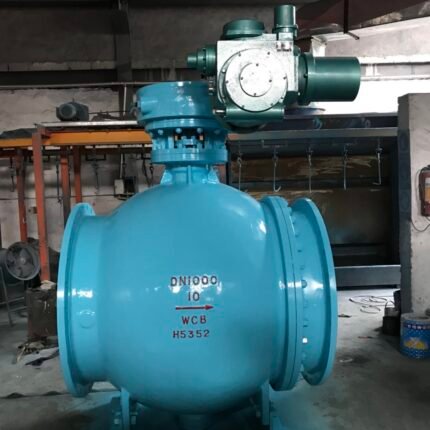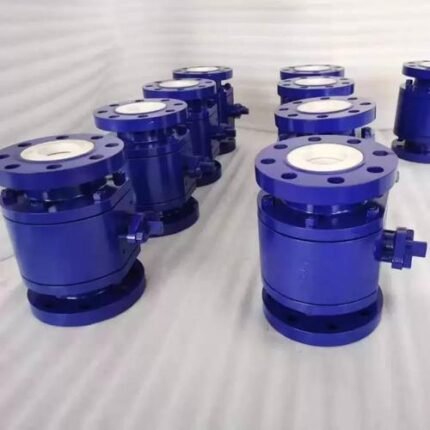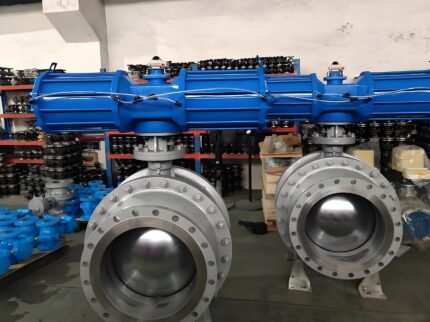
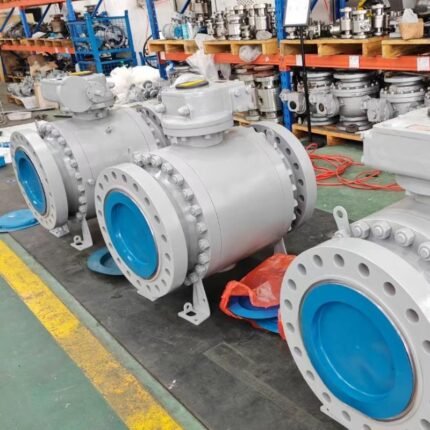

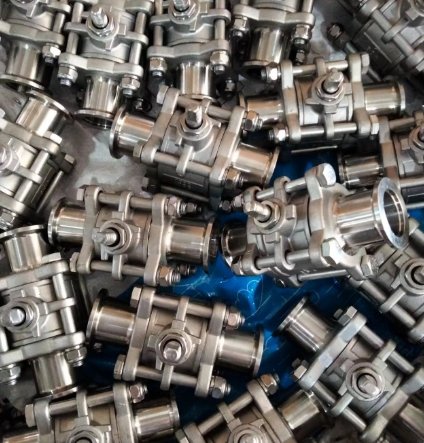
GU stainless steel manual vacuum ball valve
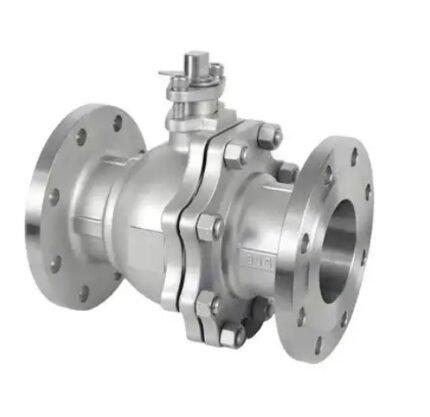
GU stainless steel manual vacuum ball valve Used to connect or disconnect the flow of media in vacuum (pressure) system pipelines. Applications include vacuum, dairy, wine, bioengineering, food, pharmaceutical, beverage, cosmetics, and chemical industries.
Product Name: Vacuum Ball Valve
Product Model: GU
Nominal Diameter: DN10~DN300
Structure Type: Spherical
Nominal Pressure: 1.6Mpa~6.4Mpa
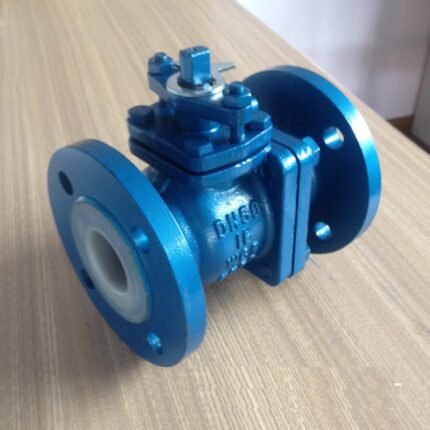
Connection Method: Flange, Threaded, Quick-Release Flange, Union
Applicable Temperature: ≤180ºC
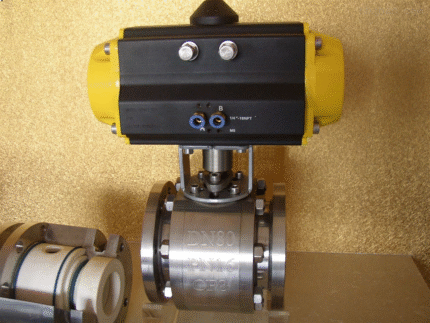
Actuation Method: Manual, Pneumatic, Electric
Valve Body Material: Cast Steel, Stainless Steel
Manufacturing Standard: GB (Chinese National Standard), DIN (German Standard), API (American Standard), ANSI (American Standard)
Applicable Media: Air, Gas, Oil, Liquid
Manufacturer:Zhejiang Kozo Valve Co., Ltd.
GU stainless steel manual vacuum ball valve Main component materials:
Valve body, valve cover, valve stem: Stainless steel
Seals: PTFE, nitrile rubber, fluororubber, PPL.
Main Technical Specifications
Valve Leak Rate: ≤1.3×10⁻⁴ Pa·L/S
Applicable Temperature: -30~+150℃
-30~+150℃ (PPL Seal)
Applicable Range:
Connection Type: Loose Flange
Operating Pressure Range (Pa):
Loose Flange (GB6070, JB919): 0.6×10⁶~1.3×10⁻⁴
Welded Flange (GB6070, JB919): 1.6×10⁶~1.3×10⁻⁴
Quick-Release Flange (GB4982): 0.1×10⁶~1.3×10⁻⁴
Threaded Connection: 1.6×10⁶~1.3×10⁻⁴
Vacuum Ball Valve: Principle and Applications
The vacuum ball valve is a type of vacuum valve developed in the 1990s. Its working principle is similar to that of a vacuum butterfly valve; the valve opens and closes by rotating a ball fixed on a rotating shaft by 90°. Vacuum ball valves open and close faster than vacuum butterfly valves, but are larger in size and have a higher leakage rate.
Because its valve body and stem are made of stainless steel, while the valve seat and packing are made of polytetrafluoroethylene (PTFE), it is suitable for media such as air, water, steam, acids, and alkalis. The medium temperature range is -25 to 120°C, and it is suitable for connecting or disconnecting the flow of acidic or alkaline gases and liquids in vacuum and pressure systems with working pressures of 1×10⁻³ to 1.6×10⁶ Pa.
Vacuum Ball Valve Types and Performance Parameters
Vacuum ball valves are available in three types: manual, electric, and pneumatic.
a) Vacuum ball valves produced in my country include manual (GU type), pneumatic (GUQ type), and electric (GUD type) models.
b) Vacuum pressure ball valves produced in my country include pneumatic (GQQ type) and electric (GQD type) models. The technical performance parameters for these two types of vacuum pressure ball valves are: leakage rate less than or equal to 1.3 × 10⁻⁴ Pa·L/s; operating pressure range 10⁻⁴~1.6 MPa; operating temperature -30~150℃; valve body and ball material 316L; sealing material reinforced PTFE and fluororubber; using a 1/4 rotary pneumatic (or electric) actuator, ensuring smooth operation; and providing electrical signal output for valve opening and closing.
GU Manual Vacuum Ball Valve Selection Analysis: Confirming Vacuum Requirements
Vacuum valves are generally classified into three categories based on their working pressure, i.e., vacuum level:
Low Vacuum Valve: Absolute pressure 101325~0.133 Pa
High Vacuum Valve: Absolute pressure 0.133~1.33 × 10⁻⁶ Pa
Ultra-High Vacuum Valve: Absolute pressure 1.33 × 10⁻⁶~1.33 × 10⁻¹⁰ Pa
The appropriate vacuum level of the vacuum ball valve must be selected based on the operating conditions.
GU Manual Vacuum Ball Valve Selection Analysis: Choosing the Connection Method
1. Flange Connection
This involves flanges at both ends of the valve body, corresponding to flanges on the pipeline, and the flanges are fixed in the pipeline with bolts. Flange connection is the most common connection type used in valves. Flanges include raised face (RF), flat face (FF), and raised face (MF), etc. This is the most commonly used connection type in vacuum valves.
2. Threaded Connection
Threaded connections are a simple connection method, commonly used for small valves. The valve body is machined according to various thread standards, with both internal and external threads available. These correspond to the threads on the pipe. This is a simple connection method commonly used for small valves. For example, some imported vacuum ball valves from VTON (USA) use threaded connections.
3. Compression Fitting Connection
The connection and sealing principle of a compression fitting connection is that when the nut is tightened, the compression fitting is subjected to pressure, causing its cutting edge to bite into the outer wall of the pipe. The outer conical surface of the compression fitting then seals tightly with the inner conical surface of the fitting body under pressure, thus reliably preventing leakage.
4. Clamp Connection
This is a quick connection method, requiring only two bolts, suitable for low-pressure valves that are frequently disassembled, such as sanitary valves.
This is a quick connection method, requiring only two bolts, suitable for low-pressure vacuum valves and sanitary valves that are frequently disassembled.
5. Welded Connection
The two ends of the valve body are machined into butt-welding bevels according to butt-welding requirements, corresponding to the welding bevels on the pipe, and fixed to the pipe by welding.
Choose the appropriate connection method required for the operating conditions.
GU Manual Vacuum Ball Valve Selection Analysis and Installation
1. Preparation
Before installation, confirm the absence of residual gas in the piping system. If present, clean it thoroughly. Prepare installation tools and accessories such as sealing rings.
2. Installation Location
The vacuum valve should be installed on a horizontal pipeline with a support to ensure stability. Avoid installing the valve in high-temperature or harsh environments.
3. Connecting the Pipeline
Connect the vacuum valve to the pipeline, paying attention to the installation direction and the correct use of the sealing ring. Tighten the bolts to the specified torque value.
4. Connecting Auxiliary Equipment
Connect auxiliary equipment as needed, such as vacuum gauges and vacuum pumps.
5. Inspection
After installation, inspect the valve to confirm its smooth operation, proper sealing performance, and absence of leaks or other abnormalities.
GU Manual Vacuum Ball Valve Selection Analysis and Operation
1. Opening and Closing
The vacuum valve should be installed in the closed state. Before opening, ensure that all gas in the pipeline has been evacuated to avoid damage or impact on the valve from residual gas.
2. Inspection
During daily use, the pipeline system should be inspected frequently, and any problems should be addressed promptly. For example, if the temperature or pressure in the pipeline system is found to be too high, the valve must be closed immediately to prevent damage.
3. Maintenance
Perform regular maintenance, such as cleaning and lubrication, to ensure the normal service life and performance of the vacuum valve.
Frequently Asked Questions:
Q: How do I determine if a vacuum valve is closed?
A: This can be determined by observing the indicator on the vacuum valve, the inspection port, or whether there is gas flow in the connecting pipeline.
Q: What are the special installation locations for vacuum valves?
A: Vacuum valves are generally not recommended for installation in locations with direct sunlight, high temperatures, or high humidity environments.
Q: Do the sealing rings of vacuum valves need to be replaced frequently?
A: Sealing rings generally need to be replaced periodically to maintain their sealing performance.
In summary, proper selection, installation, and operation of vacuum valves can ensure the normal operation and efficiency improvement of piping systems.