


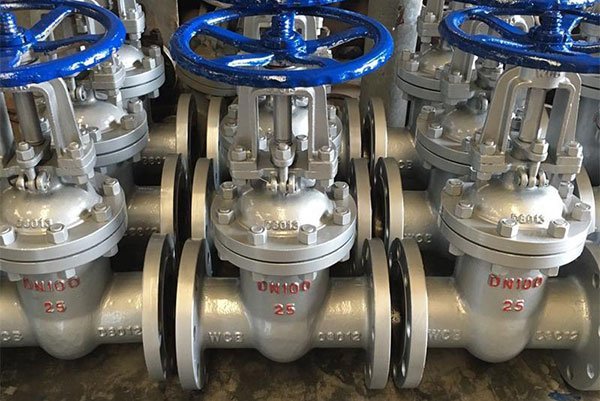
A conventional wedge gate valve should normally be used for fully open or fully closed isolation, not held partly open to regulate flow. If a process repeatedly needs an intermediate setting, treat that as a valve-selection question rather than assuming the existing gate valve is suitable. ASHRAE’s valve guidance makes the distinction between gate-valve isolation and throttling duty explicit. [1]
This advice concerns conventional industrial wedge gate valves. Specially engineered regulating gates and other purpose-designed equipment need their own manufacturer’s instructions. The word “gate” alone does not establish the permitted duty of every design.
A familiar operating problem: the line delivers too much flow
Suppose an operator reduces flow by leaving an isolation gate valve partly closed. The immediate observation may be encouraging: downstream flow falls and the process appears to settle. That observation establishes only that adding a restriction changed the system. It does not establish an acceptable long-term duty for the valve.
The next questions are practical. How often is the setting changed? Does the process remain stable when other equipment starts or stops? Is the valve also relied upon for shutdown isolation? Has its operating purpose changed since the plant was designed?
Keep the answer tied to the actual equipment. The KOZO WCB API 600 cast-steel gate valve is an on/off isolation family with wedge-gate construction. Its body material and pressure designation do not turn it into a regulating valve. A different operating requirement needs a configuration review.
Why partial opening changes what the valve must withstand
With the gate withdrawn, a conventional gate valve offers a relatively unobstructed passage. KSB’s discussion of industrial valve losses illustrates the low resistance of a fully open gate valve and explains how restrictions, flow separation and vortices contribute to pressure loss. [2]
Holding the gate in the stream creates a different condition from fully open service. The restriction is now being used continuously to dissipate pressure and influence flow. It places the valve in the very operating role for which a regulating device should be selected.
There is also a durability concern. Crane’s Aloyco operation manual warns against using its gate valves partly open for throttling because disc and seat erosion and stem connection damage can result. This is manufacturer-specific operating guidance supporting the need to respect the intended isolation duty; it is not a prediction of an identical damage rate for every valve. [3]
A quiet installation does not prove that the duty is acceptable. Conversely, noise or vibration alone does not identify the damaged component. Avoid estimating remaining service life from sound or from how long a partly open setting has appeared to work.
Passing through an intermediate position is different from holding there
A gate must pass through intermediate positions during an ordinary opening or closing movement. The selection issue is whether the process requires it to remain there or to revisit intermediate positions as a means of regulation.
Describe that requirement plainly. “Used occasionally” is not enough information if each occasion involves an extended restricted-flow period. State the expected duration, frequency, differential pressure and operating sequence. For a startup or equalization duty, ask the valve supplier and responsible process engineer to assess the actual sequence.
There is no universal number of turns, percentage opening or permitted throttling time offered here. A generic instruction such as “keep it at least halfway open” cannot replace the exact manufacturer’s approval for the intended duty.
Choose the next step according to the operating objective
If the requirement is isolation only
Keep isolation as the specified function and investigate why the line needs a restriction. The cause may lie in the process design, operating arrangement or another component. The presence of an accessible handwheel is not a reason to assign the control task to that valve.
Do not abruptly move a valve that is currently controlling a live process merely to restore its nominal isolation position. A change can affect downstream flow and pressure. Have the responsible team establish an approved transition and operating procedure.
If the requirement is occasional manual regulation
A globe valve with suitable trim is a family worth evaluating. Spirax Sarco describes the globe flow path and its tradeoff: the change in flow direction creates more resistance than a fully open gate valve. A regulating application can justify that resistance, provided the valve is selected for the duty. [4]
The KOZO CF8M stainless-steel globe valve supports project-specific review of throttling service. Confirm the plug, plats, tryckfall, fluid compatibility and operating range. Choosing a stainless body alone does not resolve those questions, and not every globe-valve configuration suits every throttling application.
Document how an operator will judge the setting. A handwheel position can be recorded, but the process acceptance requirement should describe the needed flow or pressure result rather than an assumed relationship between turns and performance.
If the requirement is continuous automatic regulation
Define the controlled variable and the required operating range before selecting an actuated control valve. Spirax Sarco distinguishes a control valve as a powered device that changes flow within a process-control system. [4]
A motor added to an isolation gate valve does not, by itself, establish suitability for modulating service. The complete selection needs the valve’s flow behavior, trim limits, actuator duty and control arrangement. Specify response and failure requirements separately from normal operating position.
Ask the supplier to identify the governing operating cases and explain the proposed selection against them. A single nominal duty point can hide the conditions at minimum demand or during an upset.
Prepare operating cases rather than one maximum-pressure figure
For an initial engineering enquiry, describe minimum, normal and maximum required flow, with the corresponding upstream pressure, downstream pressure and temperature wherever known. Keep pressures from the same operating case together; unrelated maximum values do not describe a real condition across the valve.
Include fluid identity, solids or contamination, expected changes in duty and the required shutoff performance. ASHRAE identifies fluid condition, tryck och temperatur, pressure-drop requirements and operating frequency among the selection inputs. [1]
State whether values are measured, calculated or estimated, and identify missing information. The supplier can then explain which uncertainties prevent a firm recommendation. Do not convert an incomplete enquiry into an apparently precise valve size.
For a replacement, also provide the existing valve identification, connection details, available space and actuator information. Functional suitability and physical fit are separate questions; both need resolution before ordering.
What to do if the existing gate valve has been throttled
Record the operating history and symptoms before changing hardware. Useful observations include the approximate setting, duration in that position, changes in noise or vibration, and whether subsequent shutoff performance appears different. Distinguish these observations from a confirmed diagnosis.
Arrange inspection or testing under the site’s isolation and maintenance procedures. Leakage can have several causes; a history of throttling is relevant evidence, not proof of a particular failure mechanism. Do not compensate for suspected seat damage with improvised extra closing force.
When comparing repair and replacement, address the operating purpose as well as the damaged parts. Replacing a gate valve with another isolation gate valve while retaining the same regulating duty leaves the original selection question unresolved.
The review should end with an agreed function, a suitable valve configuration and an operating instruction that matches the process. Retain the supporting data so that later changes can be assessed against the same basis.
Questions often raised during the review
Does a higher pressure class make throttling acceptable?
No. A pressure designation concerns the valve’s pressure-temperature capability; it does not by itself establish its suitability for sustained regulation. Obtain the operating limits for the selected design and trim.
Can a larger actuator solve the problem?
More available force does not change the valve’s intended function. Investigate abnormal resistance and verify the assembly’s mechanical limits before considering an actuator change.
Will a globe valve always be the best alternative?
No. The fluid, flow range, tryckfall, required behavior and maintenance constraints determine the choice. Globe valves are one option for assessment, not an automatic replacement for every gate-valve application.
Need to separate isolation from regulation? Send KOZO your valve duty and operating cases. Describe whether you need on/off isolation, occasional manual adjustment or continuous automatic control, and identify the data still requiring confirmation.
Technical references
- ASHRAE: Handbook, Chapter 46: Valves.
- KSB: Pressure Loss of Industrial Valves.
- Crane: Aloyco Installation and Maintenance Manual, operation guidance.
- Spirax Sarco: Isolation Valves—Linear Movement.