

Guia de seleção: Como escolher a válvula esférica de aço forjado de alta pressão certa?
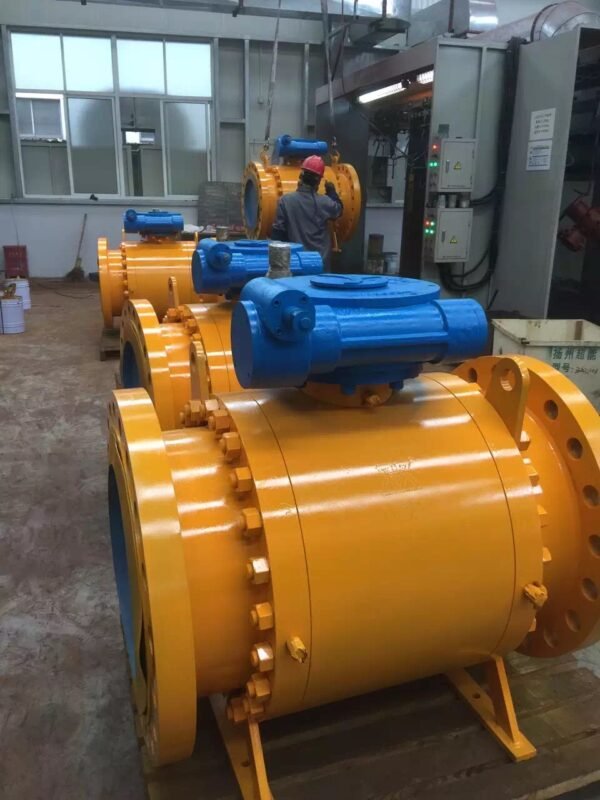
High-pressure forged steel ball valves are industrial valves whose bodies are made of carbon steel (such as ASTM A105), aço inoxidável (such as 304, 316eu), or alloy steel (such as F11, F22) through a forging process. Here, “high pressure” typically refers to valve designs conforming to ASME Class 900, 1500, e 2500, with corresponding pressure capacities ranging from 2200 PSI to over 6000 PSI.
Detailed Selection Criteria
Step 1 – Determine Operating Pressure and Temperature
Identify the system’s maximum operating pressure (including potential pressure fluctuations) and temperature range. As a general rule, forged steel valves should be selected when operating conditions exceed 1,000 PSI (≈6.9 MPa), especially when operating pressure exceeds 6.4 MPa, temperature is below -30°C or above 200°C, or the medium is flammable, explosivo, or highly toxic.
Step 2 – Assess Medium Characteristics
Determine whether the medium is corrosive, contains abrasive particles, or contains acidic components (H₂S). For acidic conditions, ensure compliance with NACE MR0175 standards and select duplex steel or 316 SS material. For high-temperature media (>300°C), a metal-to-metal (hard) seal is required.
Step 3 – Select Valve Body Material and Structure
Non-corrosive high-pressure conditions: ASTM A105 carbon steel.
General corrosive environments: ASTM A182 F304/F316 stainless steel.
Highest corrosion resistance and high yield strength: Duplex steel (F51/F53).
Estrutura: Floating ball type for smaller diameters and lower pressures; fixed type (pivot type) for larger diameters and higher pressures.
Step 4 – Selecting the Seal Type
Soft seal (PTFE/RPTFE): For applications requiring absolute zero-leakage shut-off, clean media, and moderate temperatures (typically ≤200°C).
Hard seal (metal-to-metal): For high-temperature applications (up to 500°C and above), high-frequency cycling, or abrasive media.
Step 5 – Determine Connection and Actuation Method
High-pressure forged steel ball valves can be configured with various connection methods:
Flanged (ASME B16.5/B16.47)
Butt weld (permanent installation, eliminates flange leakage)
Socket weld (ASME B16.11, for ≤2 inch diameters)
Threaded (NPT, ANSI/ASME B1.20.1, compact connection)
Actuation methods include: handle/handwheel (manual), gearbox (for large diameters), pneumatic actuator (on/off or regulating), electric actuator (controle remoto), and hydraulic actuator.
Step 6 – Verify Industry Standards and Certifications
Ensure the valve supplier provides traceable documentation, including: Material Test Records (MTRs), non-destructive testing records for critical components, and test reports (including water pressure, low-pressure air tightness, fire resistance, and low-emission testing). API 6D certification remains the highest standard for line valves.