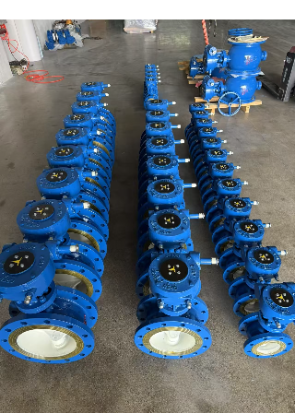

Brève description des caractéristiques de débit et de pression des vannes de régulation de débit et de pression électriques
The electric flow regulating valve can automatically adjust the preset pipeline medium parameters, keeping them constant within a certain accuracy range, and the accuracy range can also be adjusted. The electric flow regulating valve has excellent cavitation resistance. The ribs on the valve body’s inner wall also function as flow straighteners, dispersing water flow and preventing cavitation. Simultaneously, it reduces valve noise and piston vibration.
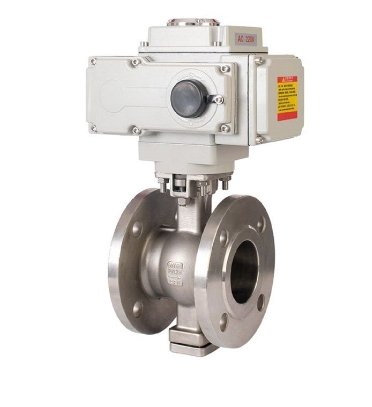
The valve’s control system can utilize integrated electronic circuitry, resulting in a compact size, high reliability, high sensitivity, and convenient installation and debugging. If high control precision and complexity are not required, the electric flow regulating valve can be controlled manually or electrically.
Electric flow regulating and pressure regulating valves are mainly used in water plants, centrales électriques, water diversion projects and other pipeline systems where the medium is water, to regulate the flow rate and flow pattern of the medium in the pipeline and to regulate the pressure of the pipeline.
The control system of the electric flow regulating valve can adopt integrated electronic circuits, which are small in size, highly reliable, highly sensitive, and easy to install and debug. Leakage is zero when fully closed, and it can be used as a shut-off valve.
The electric flow regulating valve can automatically adjust the preset pipeline medium parameters, keeping them constant within a certain accuracy range, and this accuracy range can also be adjusted. The electric flow regulating valve has good cavitation resistance; the ribs on the inner wall of the valve body also act as flow straighteners, dispersing water flow and preventing cavitation. At the same time, it also reduces valve noise and piston vibration.
Basic Performance of the Electric Flow Regulating Valve
(1) Pressure Regulating Range. The pressure regulating range refers to the adjustable and controllable range of the output pressure P2 of the pressure reducing valve, within which the specified accuracy must be achieved. The pressure regulating range is mainly related to the stiffness of the pressure regulating spring.
(2) Flow Characteristics. Flow characteristics refer to the characteristic that the output pressure changes with the output flow rate g when the input pressure is constant. The smaller the change in output pressure when the flow rate g changes, the better. Generally, the lower the output pressure, the smaller its fluctuation with changes in output flow rate.
(3) Pressure Characteristics. Pressure characteristics refer to the characteristic of output pressure fluctuation caused by fluctuations in input pressure when the flow rate g is constant. The smaller the output pressure fluctuation, the better the characteristics of the pressure reducing valve. The output pressure must be lower than the input pressure by a certain value to remain essentially unchanged with changes in input pressure.
The improved electric flow regulating valve is not only suitable for clean water, but also has good tolerance to natural river and lake water and lightly polluted water. The design structure and material selection have solved the long-standing problems of scale buildup, jamming, and excessively large drive devices in flow regulating valves.
The electric flow regulating valve is superior to traditional flow regulating valves in that its structural design and material selection make it resistant to sewage clogging of the slide, scale buildup, and jamming. The drive device is significantly reduced.