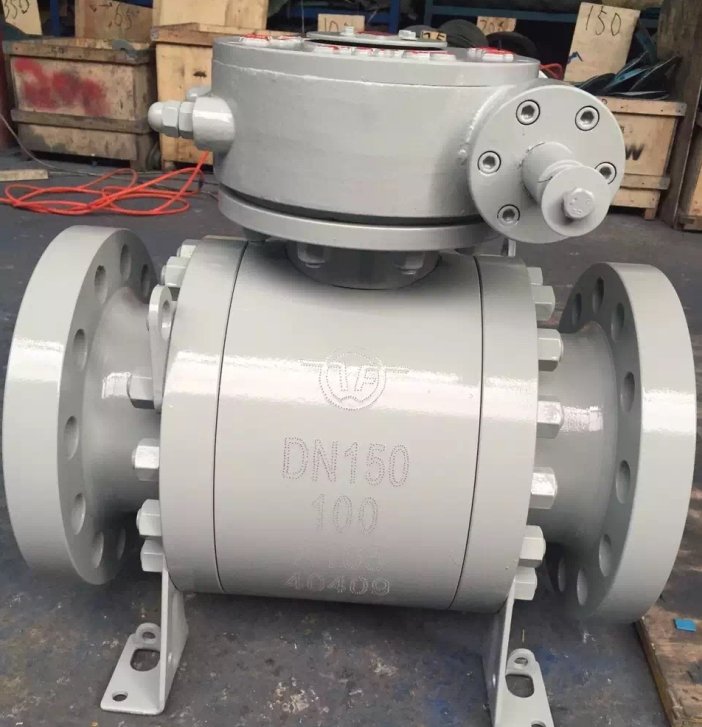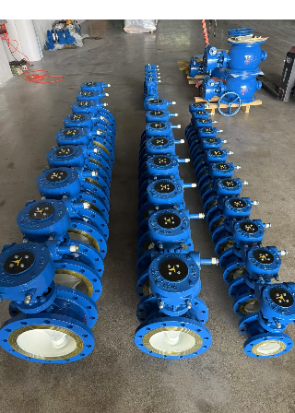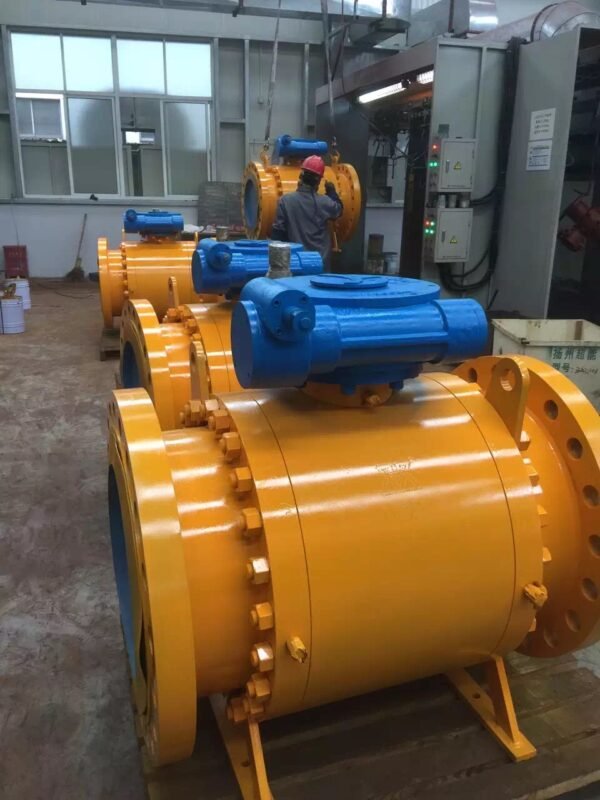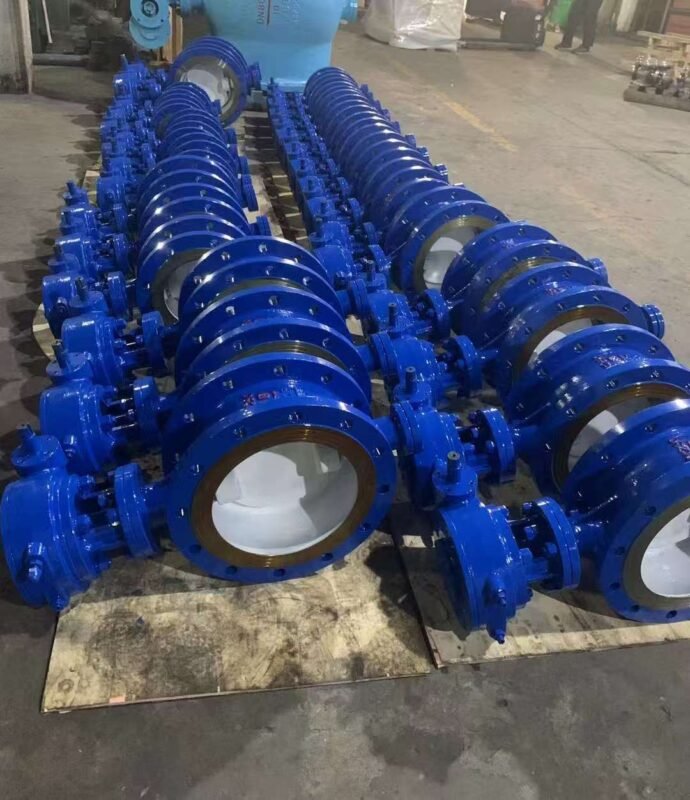

Avantages et fonctionnement des vannes à bille fixes standard ASME
Advantages of stationary ball valves:
1. Étanchéité d'urgence avec injection de graisse: In the event of unexpected seat seal failure due to foreign objects in the medium or fire, the grease injection valve provides a quick connection to the grease injection gun. The imported pump allows for convenient and rapid injection of grease into the seat seal, atténuer les fuites.
2. Reliable stem sealing and low operating torque: En plus de la bague d'étanchéité standard, the stationary ball valve also features an O-ring on the packing gland, ensuring reliable stem sealing with double sealing. La garniture en graphite ajoutée et l'injection de graisse minimisent les fuites de tige après un incendie.. Le palier lisse de tige et le palier de butée facilitent le fonctionnement de la vanne.
3. Full bore or reduced bore: Stationary ball valves can be selected with either a full bore or reduced bore structure as needed. For full bore pipeline ball valves, the flow orifice diameter matches the pipeline inner diameter, faciliter le nettoyage des canalisations.
4. Extendable stem: The valve stem can be lengthened according to installation or operational requirements. Extended stem fixed ball valves are particularly suitable for applications requiring underground pipeline installation, comme les gazoducs de ville. The extended stem size is determined according to customer requirements.
5. Fonctionnement flexible: Utilisant des sièges de soupape et des roulements de tige avec un faible coefficient de frottement et une excellente autolubrification, le couple de manœuvre de la vanne est considérablement réduit. Donc, même sans mise à disposition de graisse d'étanchéité, the valve can be operated flexibly and smoothly for extended periods.
Operation and Use of Fixed Ball Valves
1. Before operation, ensure that the pipeline and fixed ball valve have been flushed.
2. Valve operation is completed by rotating the valve stem according to the input signal of the actuator: a 1/4 turn (90°) forward rotation closes the valve. A 1/4 turn (90°) reverse rotation opens the valve.
3. When the actuator’s direction indicator arrow is parallel to the pipeline, the valve is open; when the indicator arrow is perpendicular to the pipeline, the valve is closed.