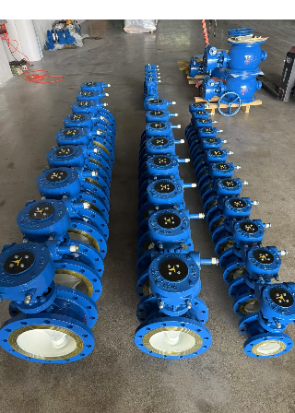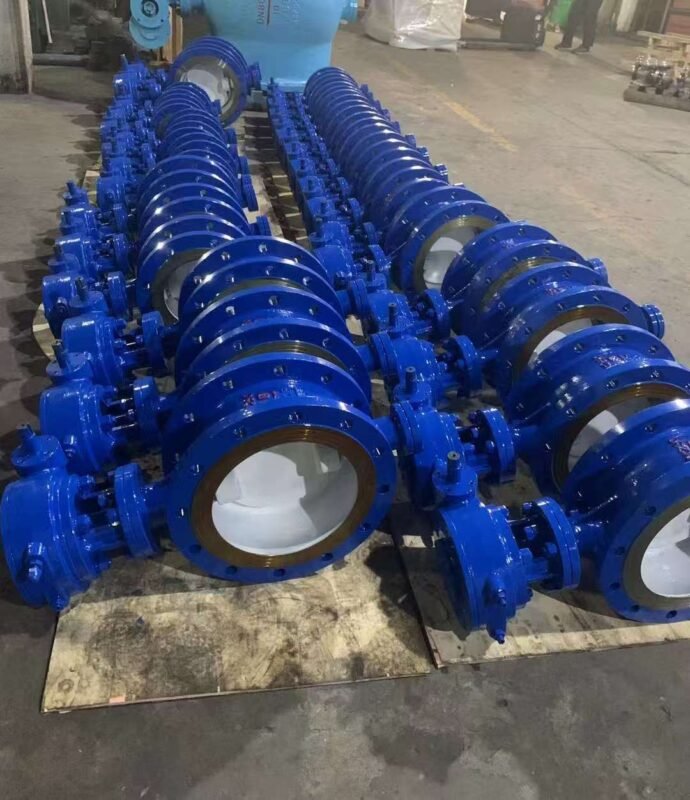

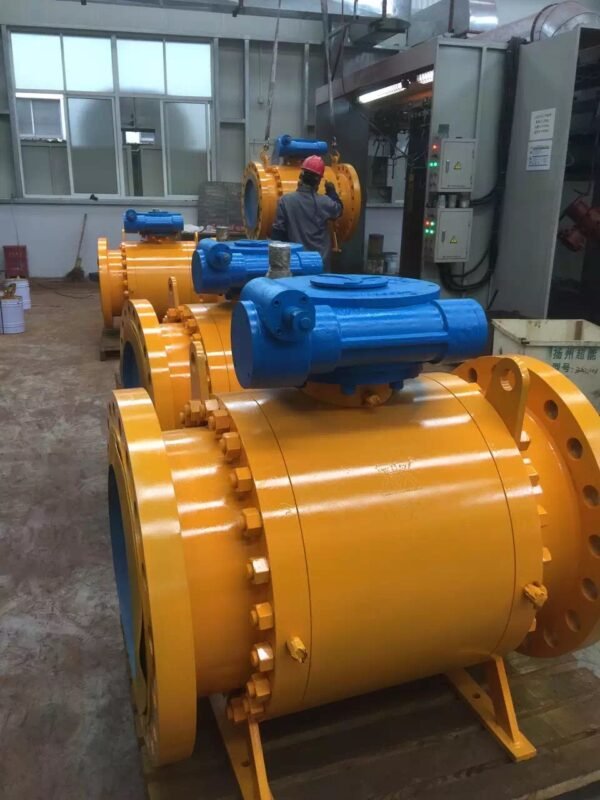
Advantages and features of ASME ball valves
A ball valve uses a ball with a circular through-hole as its opening and closing element. Driven by the valve stem, the ball rotates 90 degrees around the center of the stem to complete the opening and closing function. Based on their structural form, ball valves are mainly classified into floating ball valves and fixed ball valves; based on their material composition, they are mainly classified into cast steel ball valves and forged steel ball valves; based on the characteristics of their sealing surface, they are mainly classified into soft-seal ball valves and metal hard-seal ball valves; based on their valve body structure, they are mainly classified into split-type ball valves, top-entry ball valves, and fully welded ball valves. Ball valves are used to cut off or connect the medium in pipelines and are widely used in petroleum refining, long-distance pipelines, chemical industry, papermaking, pharmaceuticals, water conservancy, power, municipal engineering, and steel industries, especially in oil and natural gas, national oil reserves, and oil refining cracking units. Their strength, safety, and resistance to harsh environments are specially considered in their design, making them suitable for various corrosive and non-corrosive media. Different materials can be selected to transport water, steam, oil, natural gas, nitric acid, acetic acid, oxidizing media, urea, etc. Ball valves have a compact structure, reliable sealing, and the sealing surface and ball are always in a closed state, making them less susceptible to erosion by the medium and easy to operate and maintain.
Advantages and features of ASME ball valves Structural Features
1. When the ball valve is fully open or fully closed, the sealing surfaces of the ball and seat are isolated from the medium, thus preventing erosion of the sealing surfaces by high-speed media passing through the valve.
2. The ball valve has a simple structure, good sealing performance, and low opening and closing torque.
3. It has the lowest flow resistance (virtually close to zero).
4. Reduced bore or full bore.
5. Flange end face or butt weld end face.
6. Soft-seal ball valves all have fireproof and anti-static devices.
7. The valve stem is designed to prevent ejection from the valve body due to improper operation.
8. It can be connected to various drive devices. Drive devices include handles, worm gears, electric, pneumatic, pneumatic-hydraulic, and electro-hydraulic actuators.
9. Easy position adjustment. When replacing or installing the actuator online, the position of the ball orifice may not be clearly visible. The BTL ball valve provides a special “positioning groove” that makes it very easy and accurate to find the fully open or fully closed position of the ball valve. 10. For valves with welded ends, the valve end material (transition section) can be adjusted according to the user’s pipeline material grade to ensure material strength compatibility and weldability. For valves with sleeves at both ends, the sleeve length ensures that on-site welding operations do not affect the sealing material;
11. Buried design. For buried valves, the valve stem is lengthened according to project needs to facilitate above-ground operation, and the corresponding grease injection, drainage, and venting devices are extended from the pipe to the ground.