
Differences and Selection Guide for Fireproof and Antistatic Ball Valves vs. Ordinary Ball Valves
During operation, the ball and seat of a fireproof and anti-static ball valve experience friction, generating static electricity that accumulates on the ball. This is unacceptable for ball valves used in gas, dầu, and chemical pipelines, as it could potentially cause pipeline explosions. Anti-static ball valves are equipped with a static discharge device that immediately removes the accumulated static charge from the ball, effectively ensuring safe pipeline operation. Generally, both domestic and international standards employ elastic element connections, ensuring that the resistance between the ball and valve body, and between the valve stem and ball, is below 12VDC and below 10 ohms, according to regulations.
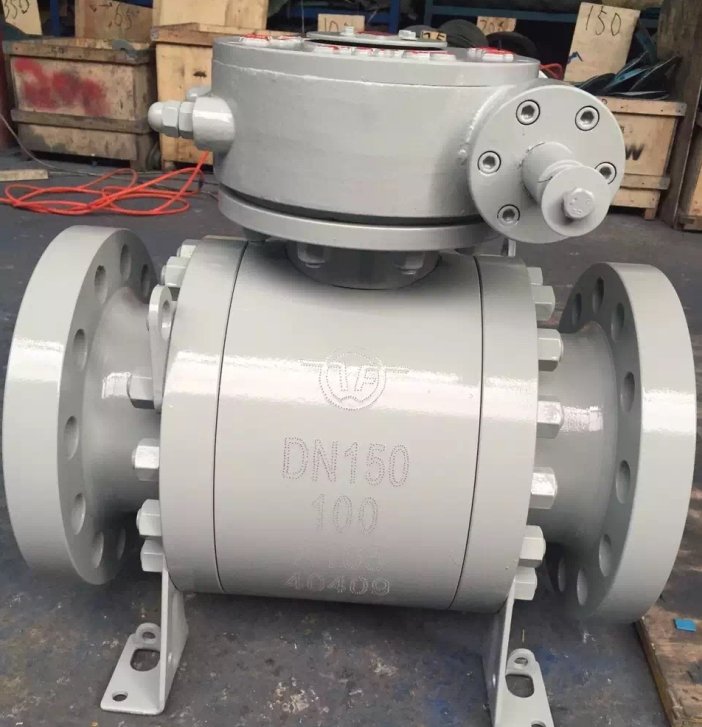
Fireproof and antistatic ball valves are suitable for pipelines carrying natural gas, manufactured gas, liquefied petroleum gas, city gas, and non-corrosive gases. They feature antistatic and fireproof devices: conductive springs are installed between the ball and valve stem, and between the valve stem and valve body. This allows static electricity generated during valve opening to be channeled through designated channels into the pipeline and discharged into the ground, thus eliminating static electricity. This prevents static sparks from igniting flammable media, ensuring system safety. The fireproof device utilizes a double seal design. When the soft seal melts due to high temperatures, the valve core ball re-seales at a right angle to the hard seal behind the soft seal, creating a second seal.
Compared to conventional ball valves, fireproof and anti-static ball valves are used in a wider range of industries and offer significantly improved safety. In fire-prone environments, they effectively prevent internal leakage. This is primarily achieved through the ball valve’s sealing ring, a double-layer seal consisting of a soft seal and a metal seal. When the soft seal is damaged by fire, the metal seal can further fill the gap, providing a crucial backup seal and preventing large-scale leakage of media and the spread of fire.