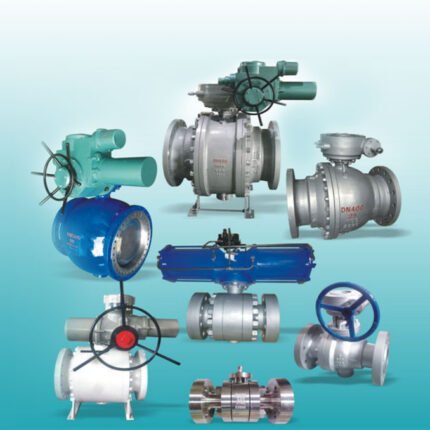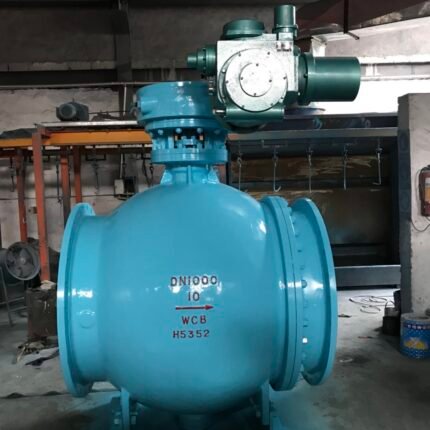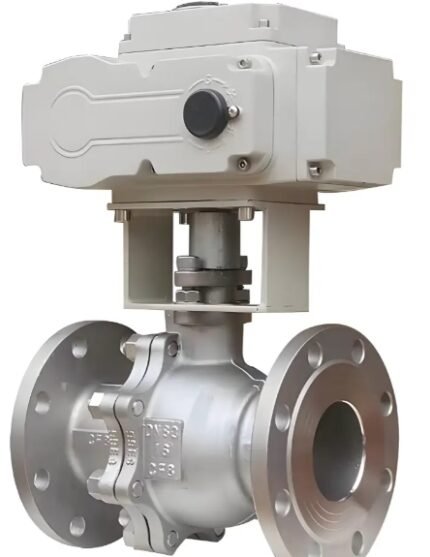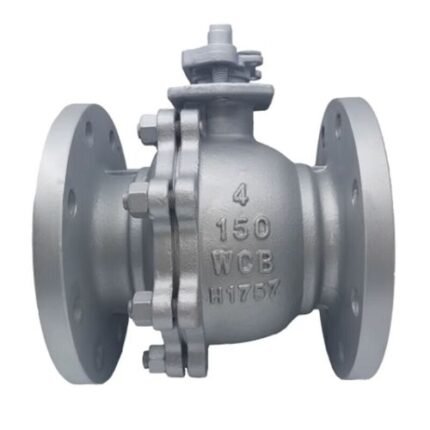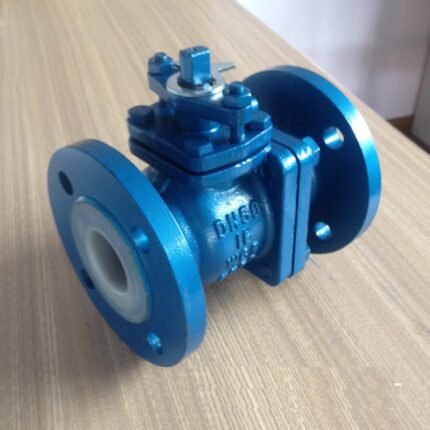

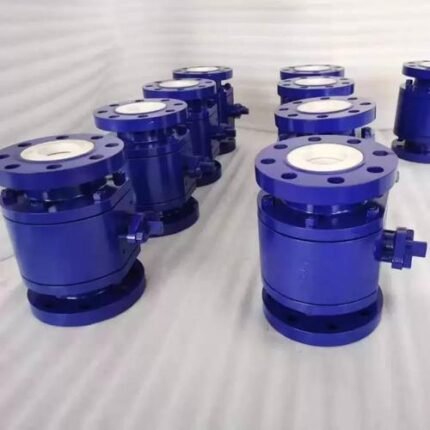
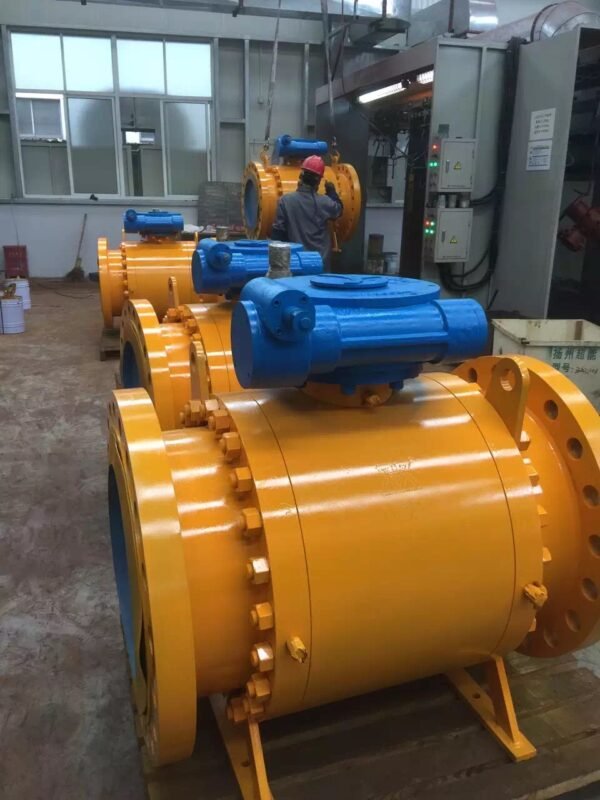
Q41H hard-seal ball valve, WCB valve body, PN16 flange connection.
The Q41H hard-seal ball valve is suitable for various pipelines of Class 150 to Class 2500 and PN16 to PN160, used to cut off or connect the medium in the pipeline. Depending on the material selected, the hard-seal ball valve can be used for various media, including non-corrosive media, weakly corrosive media, nitric acid, acetic acid, oxidizing media, urea, 等, and is particularly suitable for harsh conditions such as media containing solid particles, スラリー, coal powder, and ash. The hard-seal ball valve can be driven manually, by a worm gear, pneumatically, or electrically. Metal hard-seal ball valves generally use flange connections, but butt-welded connections are also possible.
Product Name: Hard Seal Ball Valve
Product Model: Q41H
Nominal Diameter: DN15~DN300
Structure Type: Spherical
Nominal Pressure: 1.6Mpa~6.4Mpa~16.0Mpa~42.0Mpa
Connection Method: Internal Thread, External Thread, Flange, Wafer, Welding, Compression Fitting
Applicable Temperature: ≤550ºC
Actuation Method: Manual, Worm Gear, Electric, Pneumatic, Hydraulic
Valve Body Material: Cast Steel, Carbon Steel, Forged Steel, Stainless Steel
Manufacturing Standard: GB (Chinese National Standard), DIN (German Standard), API (American Standard), ANSI (American Standard)
Applicable Media: Water, Oil, Gas, Liquid
Manufacturer: 浙江Kozoバルブ社, 株式会社.
Seat Hardening Technology
Hard-seal ball valves utilize a completely metal-to-metal seal between the ball and seat. To ensure reliable sealing under various temperatures and pressures, various advanced ball and seat hardening technologies are employed to meet different user conditions and requirements. These include supersonic spraying, nickel-based spray welding, special surface hardening, and hard alloy spray welding. The surface hardness of the ball and seat can generally reach HRC60 or higher, with some reaching HRC74 or higher. The sealing surface material can withstand temperatures up to 540℃, with some reaching 980℃. The bonding strength of the metal hard-seal flange ball valve material can reach over 10000 PSI, and the sealing surface material also possesses excellent wear resistance and impact resistance. Hard-seal fixed ball valves are suitable for most harsh operating conditions.
Prevent the valve from swelling at high temperatures
Under high temperature conditions, thermal expansion can easily cause the ball and valve seat to swell, causing the valve to fail to open. The hard-sealed ball valve adopts a disc spring or spring-loaded patented sealing structure. The thermal expansion of parts at high temperatures can be absorbed by the disc spring or spring, so it can ensure that the valve will not be swollen to death at high temperatures and can be opened and closed flexibly at high temperatures.
Excellent sealing performance
Using a unique ball grinding process, through the rotation of the ball and grinding equipment in different directions in space, the surface of the ball reaches extremely high roundness and smoothness, and the sealing performance of the valve fully meets or exceeds the standard requirements.
Complete fireproof structural design
The sealing surface of the valve adopts a metal-to-metal sealing structure, the filler adopts flexible graphite, and the gasket adopts a stainless steel + flexible graphite structure. The valve therefore ensures reliable sealing even in fire situations.
Natural anti-static structural design
The valve body, valve seat, ball and other metal parts of the metal hard-sealed ball valve are in close contact, naturally forming an electrostatic channel. Therefore, metal hard-sealed ball valves do not need to be equipped with special anti-static devices.
Double blocking and bleed function
Hard seal fixed ball valves generally adopt a ball front seat sealing structure. The two valve seats of the metal hard-sealed fixed ball valve can independently cut off the medium at the inlet and outlet ends, achieving a double blocking function. When the ball valve is closed, even if both ends of the valve inlet and outlet are pressurized at the same time, the middle cavity of the valve and the channels at both ends can be blocked from each other, and the remaining medium in the middle cavity can be discharged through the relief valve.
Materials Of main Parts Materials Of main Parts
valve body
Body 304 ZG1Cr18Ni9Ti CF8 CF3 ZG1Cr18Ni12Mo2Ti CF8M CF3M
ball stem
Ball Stem 304 1Cr18Ni9Ti 304 304L 1Cr18Ni12Mo2Ti 316 316L
valve seat
Seat -29℃~300℃(parapolymer PPL)
-29℃~550℃(metal)
Gasket
Shim Stainless Steel/flexible Graphite Tooth Profile Gasket
Stem seat
Stem Seat Stainless Steel/Flexible Graphite
filler
Packing Enhanced Flexible Graphite
Packing gland
Gland 1Cr18Ni9Ti 304 304L 1Cr18Ni12Mo2Ti 316 316L
temperature
Temperature -29℃~300℃(parapolymer PPL)
-29℃~550℃(metal hard seal)
medium
Medium water vapor oil gas
Water steam
Oil goods Mud, sand, slurry, slurry Strong oxidizing medium
strongey oxidable medium Acetic Acid Urea