

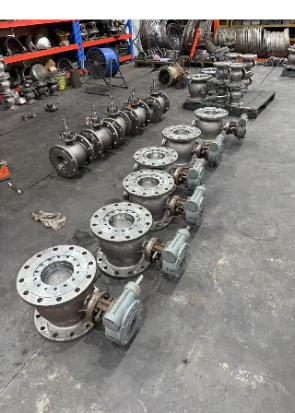
Function and Selection of ASME Standard Check Valves
A safety valve is installed instead of a bypass valve. Its function is similar to that of a bypass valve. It is located near the check valve outlet and releases some water when water hammer causes pressure to rise, preventing further pressure buildup and damage. An air or inert gas buffer tank is also installed. Located near the check valve outlet, it compresses pressurized gas in the buffer tank when water hammer occurs, mitigating the pressure increase.
The function of the check valve at the outlet of a centrifugal pump is to prevent backflow of liquid in the outlet pipeline, which could cause water hammer and damage to the pump impeller. The installation of a check valve is unrelated to the number of pumps. The main purpose of the check valve is to prevent liquid backflow after the pump stops, which could cause the pump to reverse and damage it. It also prevents backflow from damaging other storage tanks (backflow from a high-level tank can cause damage to the tank filler). Therefore, a check valve is added. However, if it can be ensured that the outlet valve is closed before stopping the pump, and the outlet valve is not leaking or damaged, a check valve may not be necessary.
Centrifugal Pump Outlet Check Valve Function and Selection
1. Pump Outlet Check Valve Selection
In general pump station projects, the selection of pump outlet check valves should follow these principles:
For pump outlet pipelines with a small diameter (DN ≤ 50mm), a lift check valve should be selected.
For pump outlet pipelines with a diameter (DN > 50mm), a swing check valve should be selected. Swing check valves can be installed horizontally or vertically. The valve disc of a swing check valve rotates around its axis, and its fluid resistance is generally less than that of a lift check valve. It is suitable for larger diameter applications, and its installation position is not restricted. It is usually installed in horizontal pipelines and is suitable for larger diameter applications. Based on the number of valve discs, they can be divided into single-disc swing, double-disc swing, and multi-disc swing types. Single-disc swing check valves are generally used in medium-diameter applications. When using single-disc swing check valves for large-diameter pipelines, it is best to use slow-closing check valves that reduce water hammer pressure. Double-disc swing check valves are suitable for medium to large diameter pipelines. Wafer-type double-disc swing check valves are small in size and lightweight, and are a relatively fast-closing type of check valve; multi-disc swing check valves are suitable for large-diameter pipelines.
2. Installation of Pump Outlet Check Valves
① Swing check valves are generally installed on horizontal pipelines; for check valves with a diameter of DN~80mm, they can also be installed on vertical or upwardly inclined pipelines.
② Straight-through lift check valves should be installed on horizontal pipelines; vertical lift check valves must be installed on vertical pipelines, with the medium flowing from bottom to top.
③ Because check valves are easily damaged, they should be installed near the pump outlet, with a shut-off valve (usually a ball valve or gate valve) at the top for easy maintenance.
④ To facilitate pressure relief before disassembly of the check valve, for check valves that do not have a built-in drain valve, a pressure relief drain valve should be installed between the check valve and the shut-off valve.
3. Protective Measures to Prevent Damage to the Check Valve Sealing Surface from Hydraulic Hammering
The check valve is designed to prevent material backflow and avoid liquid hammering on the pump impeller. However, improper installation can cause sudden impacts from water hammer on the valve seat, damaging the check valve’s sealing surface. Therefore, the following protective measures should be taken:
1. For swing check valves with a diameter >80mm at the pump outlet, horizontal installation should be used to reduce the impact of valve seat repositioning.
2. For pipelines with a pump outlet check valve diameter >=150mm, bypasses should be installed before and after the check valve to prevent excessive pressure rise before the valve, which could damage the check valve’s sealing surface.
3. For pipelines with high pressure at the beginning and end of the pump discharge pipeline, where bypasses are not permitted, the following measures may be taken.